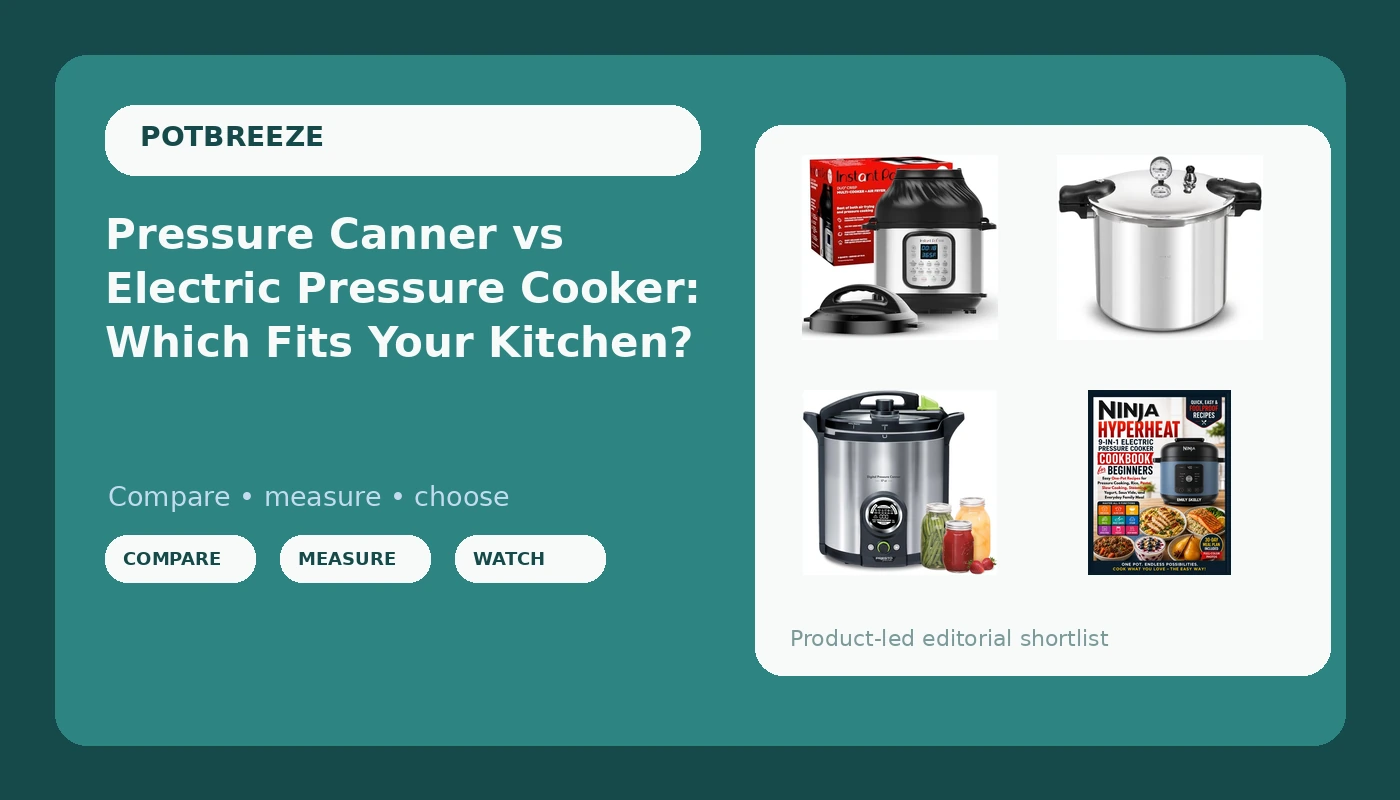
I cook dinner for five people almost every night, and I have owned 11 pressure cookers in 15 years. That count starts with a rattling stovetop model my grandma handed me and runs through most of the Instant Pot lineup, plus a canner that lives in the garage between tomato seasons. So when somebody asks me the pressure canner vs electric pressure cooker question, I understand why the answer feels slippery. Those two machines share a lid, a gasket, and a physics lesson. Almost nothing else about them lines up.
For most families, the pick is an electric multi-cooker like the Instant Pot Duo Crisp 8 Qt, because it pressure cooks, air fries, and holds dinner warm while you drive kids to practice. A true pressure canner is a different tool for a different job: putting up a year of tomatoes, beans, and stock in glass jars.
This comparison covers four things you can actually buy today. Two are electric machines, one is a stovetop aluminum canner, and one is a cookbook that a lot of new owners toss in the cart without checking whether it matches the cooker on their counter. I will tell you what each one is for, where it falls short, and which one earns counter space in a house where dinner happens at 6:15 whether you are ready or not.
Here is how the four stack up on the two things that decide it for me: what the machine does well, and what it costs you in patience.
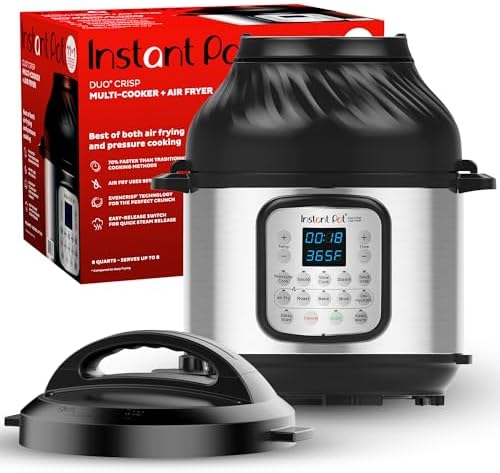
Instant Pot Duo Crisp 8 Qt 11-in-1 Air Fryer + Pressure Cooker, Steel
One base does pressure cooking and air frying, 8 quarts feeds five, and the sealing ring is a part you can actually buy again
The crisping lid is a second thing to store and it air fries at about 80 percent of a dedicated basket
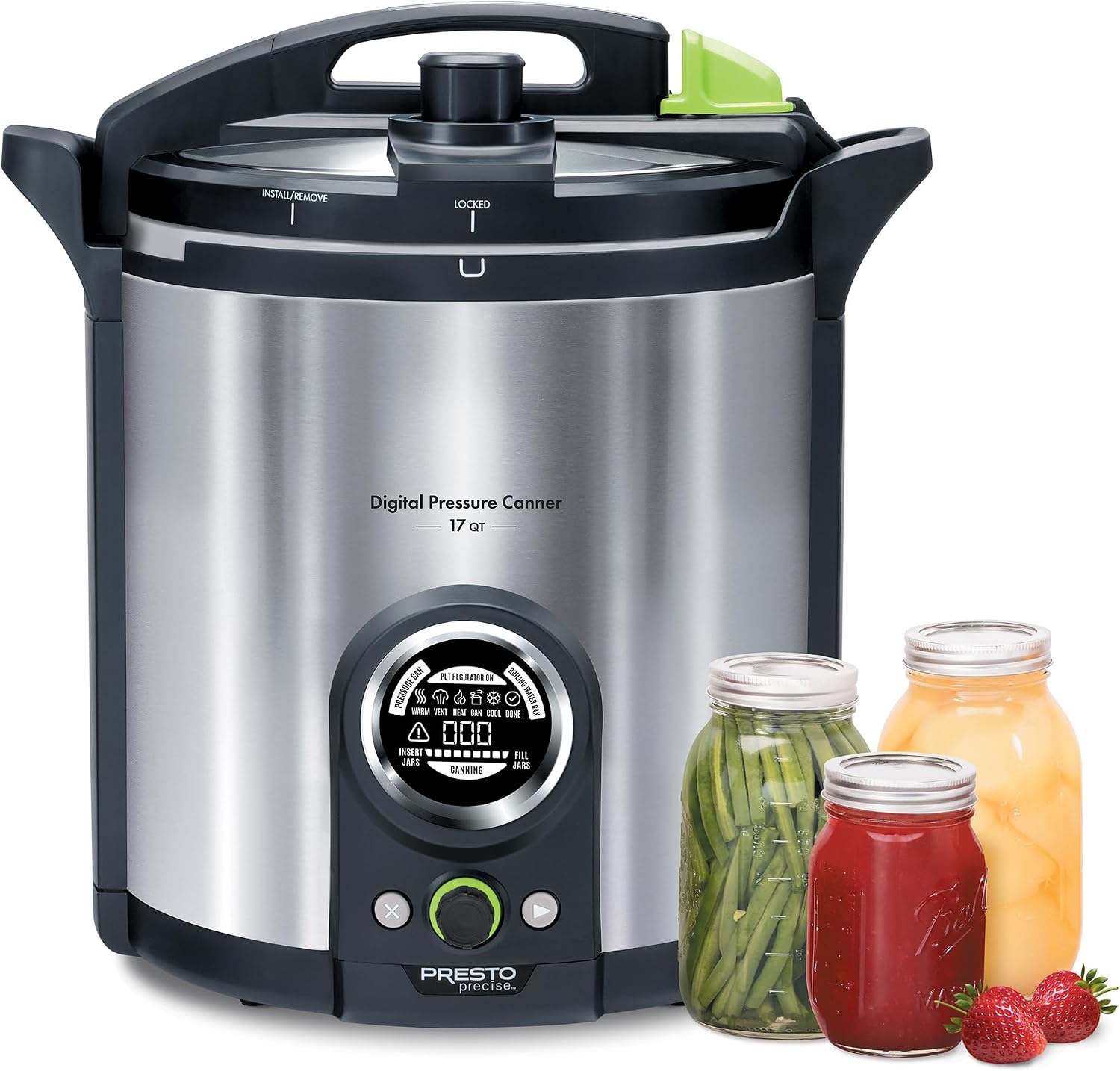
Presto 02152 17-Quart Digital Pressure Canner
Digital controls hold pressure and time for you, so canning day stops being a babysitting job
Big, heavy, the priciest pick here, and pointless if you only can once a year
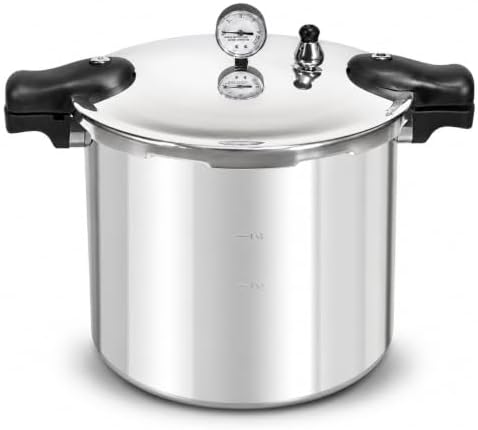
Barton Pressure Canner Release Valve Aluminum Canning Pot Cooker Pot Stove Top with Pressure Gauge Instant Fast Cooking Pot Stewing Locking System (22 Quarts) Meat, Poultry & Vegetables
Enormous 22-quart capacity, nothing electronic to fail, and the gauge tells you the truth
You are the controller, it rattles loud enough to scare the dog, and aluminum rules out induction
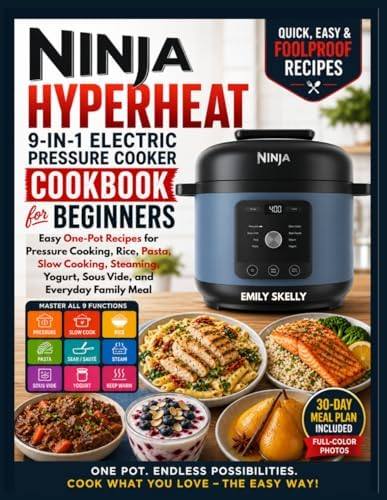
Ninja HyperHeat 9-in-1 Electric Pressure Cooker Cookbook for Beginners: Easy One-Pot Recipes for Pressure Cooking, Rice, Pasta, Slow Cooking, Steaming, Yogurt, Sous Vide, and Everyday Family Meal
Gives a new owner a structured path through pressure cooking, rice, pasta, slow cooking, steaming, yogurt, and sous vide
It is written for one specific Ninja cooker, so the program names will not match another brand
Prices and availability were captured from Amazon Creators API and may change.
How I judge a pressure cooker
My test for any cooker is boring and repeatable: weeknight dinners, one chili, one pulled pork, one soup, and a cleanup timer running the whole time. I want to know four things before I recommend anything to anybody.
First, does sauté mode get hot enough to brown meat without scorching the bottom of the insert? A weak sauté means I dirty a second pan, and a second pan means the whole point of one-pot cooking is gone. Second, how long does it take to come to pressure, and how steadily does it hold? Third, can I buy a replacement sealing ring without hunting through sketchy third-party listings? If the gasket is disposable, the cooker is disposable. Fourth, does keep warm actually hold food at a temperature I would serve, or does it turn rice into paste?
I also count pans. If a recipe claims one pot and leaves me with three, that claim goes in the loss column. Every cooker in this comparison got judged on the same four questions, and none of them got a pass for having a nice box.
Instant Pot Duo Crisp 8 Qt 11-in-1: the weeknight all-rounder
The Duo Crisp is the machine I would hand to a friend buying their first electric cooker. It is an 8-quart pressure cooker with a second lid that turns the same base into an air fryer, and that matters more than it sounds like it should. You pressure cook a chicken, swap lids, and crisp the skin in the same insert. One pot, one cleanup, and a dinner that tastes like you did more work than you did.
Sauté mode here is good enough for onions, peppers, and a pound of ground beef. It is not a line-cook sear. If you want a hard brown crust on a chuck roast before it goes under pressure, a skillet still does it better, and I say that as someone who owns the Pro for exactly that reason. But for a Tuesday, the sauté is fine, and the keep-warm function is the reason dinner is ready when my youngest finally sits down.
The 8-quart size is the sweet spot for a family of five. It fits a whole chicken, a double batch of chili, and enough pulled pork for sandwiches plus leftovers the next day. The sealing ring is a standard part you can buy on its own, which is the check that keeps a cooker out of my donation pile.
Where it loses: the air fryer lid is a second thing to store, and it is not as fast or as even as a dedicated basket fryer. It is a pressure cooker that also air fries, and it does both at about 80 percent. If crisp is your entire personality, buy a real air fryer and a cheaper cooker. If you want one appliance that covers most weeknights, this is the one. Visit on Amazon →
Presto 02152 17-Quart Digital Pressure Canner: canning without babysitting the stove
A pressure canner is not just a big pressure cooker, and this is where most people get confused. A canner has to hold enough jars to make a day of work worth it, and it has to hold temperature and pressure steady for the full processing time, because that is what makes low-acid food safe. The Presto 02152 is a 17-quart digital canner, which means the control panel manages the pressure and the timing instead of you standing there watching a dial and adjusting a burner.
That is the entire argument for going digital. On a stovetop canner you are monitoring a gauge, tweaking the flame, and hoping the pressure does not drift while you are elbow-deep in tomatoes. Here you load jars, set the process, and walk away to start prepping the next batch. For someone putting up 40 pounds of tomatoes in an afternoon, that is the difference between a hobby and a chore.
Seventeen quarts holds a serious load of pint or quart jars, and the same body handles large-batch cooking when you are not canning. The trade-offs are real. It is a big, heavy appliance that needs a dedicated spot, it is not the machine you reach for to make two cups of rice, and it is the most expensive thing in this comparison. I would not buy it unless you actually can.
If you put up jars twice a year and borrow your neighbor's canner the rest of the time, save your money. If your garage shelves fill up every September, this is the upgrade that pays for itself in one season. Visit on Amazon →
Barton 22-Quart stovetop canner: the old-school workhorse
The Barton is the opposite approach: a 22-quart aluminum canner with a pressure gauge, a release valve, and a locking system, built to sit on a burner and do the job the way it has been done for a hundred years. No circuit board, no preset menu, nothing to fail except a gasket you can see and replace.
Capacity is the headline. Twenty-two quarts is enormous, and that matters if you process a lot of quart jars or you cook for a crowd and want one pot for a giant batch of stew. Aluminum heats fast and evenly, and the gauge gives you a direct read on what is happening inside instead of a sensor's interpretation of it.
The cost is attention. You are the controller. You watch the gauge, you adjust the burner, you time the process yourself, and you stay in the kitchen while it runs. My grandma's cooker rattled and hissed and scared my kids the first time they heard it, and this one will do the same. It is also aluminum, so if your range is induction, this is not your pot.
Beginners should think hard before starting here. The learning curve on a stovetop canner is real, and the failure mode for canning is not a tough roast, it is spoiled food. If you have canned before, or you learned next to somebody who had, this is a fantastic value and a pot that will outlive you. Visit on Amazon →
The Ninja HyperHeat cookbook: a companion, not a cooker
One of these four is not a machine, and I want to be honest about that. The Ninja HyperHeat 9-in-1 Electric Pressure Cooker Cookbook for Beginners is a recipe book aimed at a specific appliance. It covers pressure cooking, rice, pasta, slow cooking, steaming, yogurt, sous vide, and everyday family meals, and for a new owner staring at a control panel with no idea where to start, a book with structure beats another preset button.
Buy it if you own that Ninja, or if you want a beginner-friendly tour of what an electric multi-cooker can do. Do not buy it expecting it to match a different brand's buttons. Ninja and Instant Pot do not use the same program names, and a recipe that says pressure cook on high for 12 minutes will not map cleanly onto a machine that calls it something else.
This is the cheapest item here and the easiest one to justify, as long as you check which cooker is actually on your counter first. Visit on Amazon →
Stovetop vs electric: the trade-offs that actually matter
Electric wins on attention. You set it and walk away. It holds pressure on its own, it holds food warm when the family is late, and it will not scare anyone in the next room. Electric loses on ceiling. A big electric canner or multi-cooker has a maximum batch size, and once you hit it you are running a second load. It also loses on repairability: when a control board dies, the machine is done.
Stovetop wins on capacity, speed to heat, and the fact that there is almost nothing to break. A gauge, a valve, a gasket, a locking bar. Stovetop loses on attention, on the learning curve, and on noise. It also ties you to the kitchen for the duration, which is a real cost if you have kids who need a ride somewhere.
The question I actually ask is what the food needs. If the answer is dinner on a Tuesday, electric. If the answer is 60 jars of tomatoes on a Saturday, a canner, and I would rather it be the one that watches itself.
One more thing that applies to all of them: check the sealing ring. If you cannot buy a replacement, walk away. A cooker with a gasket you cannot source is a counter decoration, no matter how good the first month goes.
What I would buy
Three picks, depending on who you are.
If you cook dinner for a family most nights and want one appliance that covers the most meals with the fewest dirty pans, get the Instant Pot Duo Crisp 8 Qt. It is the one I would buy again without hesitating, and the crisping lid turns leftovers into something people actually finish.
If canning is a real part of your year and you want to stop standing over a gauge, the Presto 02152 17-Quart Digital Pressure Canner is the one to save for. It costs more because it is doing a harder job.
If you have canned before, want maximum capacity, and do not mind being the controller, the Barton 22-Quart stovetop canner delivers the most pot for the least money.
And if you just bought a Ninja HyperHeat and the manual is useless, the cookbook is a small add-on that gets you cooking this week instead of next month.
Whichever way you go, buy the one that matches your Tuesday. The best pressure cooker is the one already on the counter when you get home hungry.