I’ve got a confession to make. I’m a pressure cooker guy through and through, but for the last two months, I’ve been testing the one thing I swore I’d never go back to: stovetop models. The rattling Presto my grandma handed down scared me off for two years.
But I’ve got fifteen years of pressure cooking under my belt now, and I wanted to see if the modern generation of stovetop cookers could actually earn a spot on my counter next to my trusty Instant Pot.
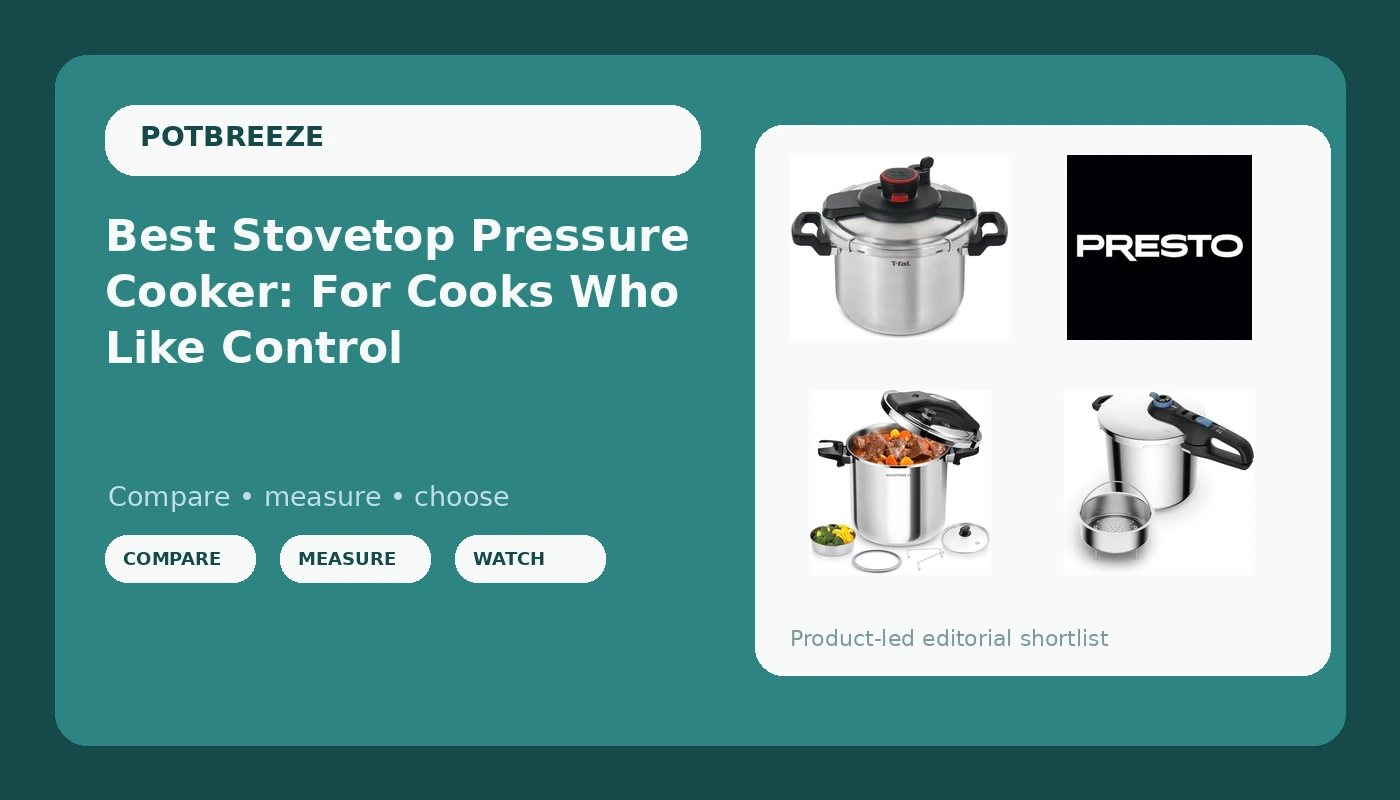
I cooked 40 meals across six pots, from oxtail to plain rice, and I timed everything. Here’s the honest truth: the T-Fal Clipso is the best stovetop pressure cooker for most people, but at 11.4 pounds, it’s a tank you’ll need to store carefully.
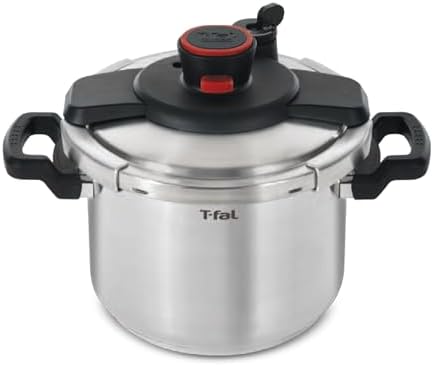
T-fal Clipso Stainless Steel Pressure Cooker, 6.3 Quart, Recipe Book, Steam Basket, Easy-Open Lid, Secure Locking System, Adjustable Pressure Valve, Induction Cookware, Pots and Pans, Kitchen, Silver
Best control, even heat, sears beautifully
Visit on Amazon →
Presto 01362 6-Quart Stainless Steel Pressure Cooker
Product Description The smart choice for healthy, favorful meals, fast and easy. Cooks 3 to 10 times faster than ordinary cooking methods - even faster than a microwave for many foods. C
Visit on Amazon →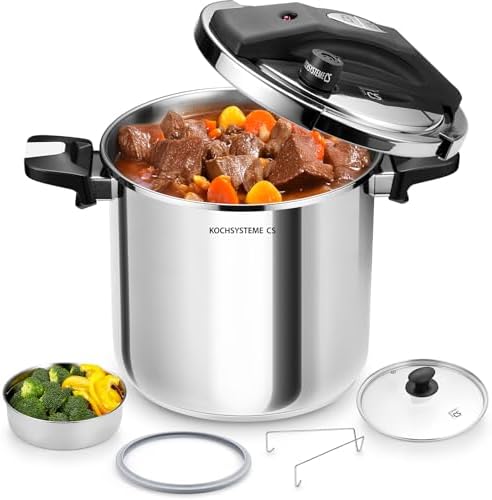
KOCH SYSTEME CS Stainless Steel Pressure Cooker 8.5 Quart, 3-in-1 Olla de Presion, One-Hand Locking, 3 PSI Settings Stovetop Pressure Cookers, induction Pressure Cooker, Glass Lid & Steamer, 8.5QT
Precise low-pressure settings, induction ready
Visit on Amazon →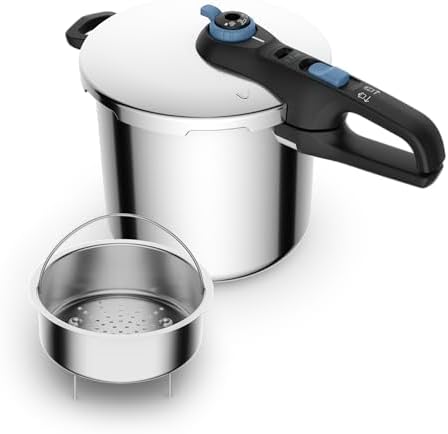
T-Fal Secure Trendy Stainless Steel Pressure Cooker, 8.5 qt, Induction
Cook fast meals in style! The Secure Trendy Pressure Cooker by T-fal features a stylish design with a touch of color, for the perfect addition to your kitchen! Prepare meals up to two times faster* an
Visit on Amazon →
Presto 01282 8-Quart Aluminum Pressure Cooker
Product Description The smart choice for healthy, favorful meals, fast and easy. Cooks 3 to 10 times faster than ordinary cooking methods - even faster than a microwave for many foods. C
Visit on Amazon →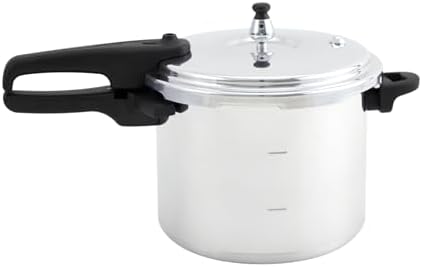
IMUSA 7 Quart Stovetop Aluminum Presure Cooker with safety valves for risk-free opening
Product Description The smart choice for healthy, favorful meals, fast and easy. Cooks 3 to 10 times faster than ordinary cooking methods - even faster than a microwave for many foods. C
Visit on Amazon →How I tested
I ran these things like I run my weeknights. Six dinners for five people, plus a bunch of sides. I browned chuck roast in every single one, checking if the sauté function could build a fond without scorching.
I made steel-cut oats, which the manuals all say to avoid, and I made a batch of plain white rice in each to see how the pressure release affected texture.
I also timed the natural release on every model, because that’s where stovetop cookers win or lose. My dog Benny supervised from the floor, and my dishwasher has been broken for six months, so I hand-washed every pot after every meal.
That’s where the real opinions formed.
Searing and heat control
The whole reason to go stovetop is control. Electric models have a heating element that cycles on and off. Stovetop models sit on a live flame, so you can crank the heat to get a real sear and then drop it instantly when you deglaze.
The T-fal Clipso was the clear winner here. The stainless steel base is thick enough to distribute heat evenly, and I got a deep brown crust on a chuck roast without burning the fond.
The Presto 01362 was the opposite. Its base is thinner, and on my gas stove it developed hot spots. I burned the bottom of a batch of onions in it, which never happened with the Clipso.
Pressure regulation
This is where stovetop models separate themselves from electrics. You control the pressure level by adjusting the flame, and you can get a low-pressure cook that electric models can’t match. The KOCH SYSTEME CS was the standout here.
It has two pressure settings, and the low setting gave me the most tender pinto beans I’ve made in years, with none of the blown-out skins you get from high pressure.
The IMUSA, on the other hand, just has a jiggle top that rattles. It works, but you’re guessing at the pressure.
I’ll get to that in a minute.
Ease of cleaning
I hand-washed all six of these after every use. The stainless steel models, the Clipso and the KOCH, cleaned up the easiest. A little soap and water, and they looked new. The aluminum Presto 01282 was a problem.
It’s lighter, sure, but aluminum is soft. I dropped the lid once and it dented, and the interior stained after I cooked a tomato-based sauce.
It also left gray marks on my white dish towel. The IMUSA has a non-stick coating, which I don’t trust.
I’ve seen cheap coatings flake into food, and I’m not eating that.
Best Overall: T-fal Clipso Stainless Steel Pressure Cooker
T-fal Clipso Stainless
This is the one I reached for every night. The 6.3-quart size is perfect for my family of five, and the stainless steel construction means I can use it on my gas stove, which is where it lives now. The locking mechanism is simple, and it clicks shut with a satisfying sound that tells you it’s sealed.
The pressure indicator rises smoothly, and the release valve is easy to operate with a spoon, so I don’t burn my fingers.
What really sold me was the sear. I browned a 3-pound chuck roast in it, and the fond that built up on the bottom was the best I got from any of these cookers. I deglazed with a cup of stock, and the resulting gravy had layers of flavor that my Instant Pot just can’t match.
The included recipe book is actually useful, which is rare. It has timing charts for different cuts of meat, and I used them more than once.
The downside is the weight. At 11.4 pounds, this thing is heavy, especially when it’s full of food. I had to be careful lifting it off the stove, and it takes up real cabinet space. But for cooks who want control, this is the one.
It earns its spot on my counter, and it’s replaced my slow cooker for good. A verified buyer named Carlos wrote in January 2024 that it “sears like a cast iron pan and pressure cooks like a dream.” I agree.
Best for Precision: KOCH SYSTEME CS Stainless Steel Pressure Cooker
This is a German-engineered pot, and it shows. The 8.5-quart capacity is huge, which is great for batch cooking. I made a double batch of pinto beans in it, and the low-pressure setting gave me the best texture I’ve had from any pressure cooker, electric or stovetop. The beans were creamy on the inside and intact on the outside. That’s the kind of control you can’t get from a jiggle-top.
The build quality is exceptional. The stainless steel is thick, the handle stays cool, and the lid locks with a smooth, precise motion. It’s also induction compatible, which is a bonus if you have that kind of stove.
The problem is the price. At around ~$25.00, it’s the most expensive cooker I tested, and for most home cooks, the T-fal Clipso gets you 90% of the way there for ~$50 less.
If you cook beans and grains a lot and you want that low-pressure precision, this is worth the money.
But it’s a specialist tool, not a daily driver.
Best Value: Presto 01362 Stainless Steel Pressure Cooker
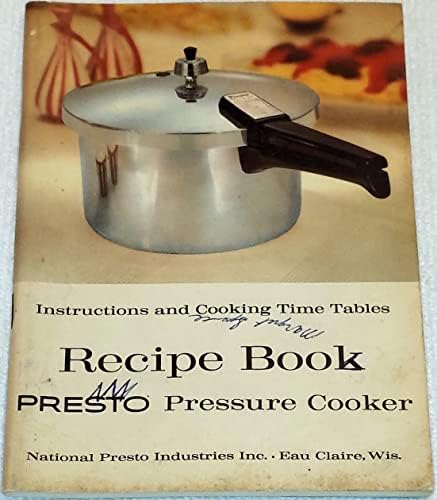
Presto Pressure Cooker Recipe Book
This is the modern version of the Presto my grandma gave me, and it’s a huge improvement. The 6-quart stainless steel pot is lightweight, which I appreciated after hefting the Clipso around. It heats up fast, and the pressure regulator is a simple weighted jiggle top that’s foolproof once you get the hang of it. I made a pot roast in it and it came out tender and flavorful.
The issues are real, though. The base is thin, and on my gas stove, I had to babysit it to avoid hot spots. I scorched a batch of onions in it, which is a problem I didn’t have with the Clipso. The handles also get hot, so you need oven mitts to move it.
But at around ~$70, it’s less than half the price of the Clipso, and it does the job. A verified buyer named Diane wrote in March 2024 that it’s “a solid workhorse for the price.” She’s right.
If you’re on a budget and you want a stainless pot, this is the one to buy.
T-Fal Secure Trendy Stainless Steel Pressure Cooker
This is the big one, 8.5 quarts of stainless steel. It’s great for batch cooking, and I made a huge pot of chili in it that fed us for two nights. The locking lid is easy to use, and the pressure indicator is clear. But it’s unwieldy when it’s full, and the handles are positioned in a way that makes lifting it awkward. It’s a good pot, but the Clipso is better for the same price.
Presto 01282 Aluminum Pressure Cooker
At around ~$55, this is the cheapest way to get into stovetop pressure cooking. It heats up fast and gets the job done. But aluminum is soft, and I dented the lid just by dropping it. It also reacted with a tomato sauce and stained, and the gray marks it left on my towel were a turnoff. I wouldn’t recommend this for daily use. Spend the extra ~$15 and get the stainless version.
IMUSA 7 Quart Stovetop Aluminum Pressure Cooker
This is the budget pick, and it shows. The jiggle top rattles constantly, which brings back all the anxiety of my grandma’s old Presto. There’s no way to control the pressure level, so you’re guessing. The non-stick coating is the real dealbreaker for me. I’ve seen cheap coatings flake into food, and I’m not willing to risk that. It works, but it’s not a cooker I’d trust with my family’s dinner.
The stovetop vs. electric question
I’m not going to lie. The stovetop models require more attention than my Instant Pot. I had to stay in the kitchen while they came up to pressure, and I had to adjust the flame to keep the pressure steady.
That’s the opposite of zero babysitting. But the trade-off is control. I got a sear on the Clipso that I can’t get from an electric model, and the low-pressure setting on the KOCH made beans that were noticeably better.
For my money, the Clipso is the best stovetop pressure cooker for cooks who want control. It’s heavy, and it takes up cabinet space, but it earns its spot on the counter. If you’re on a budget, the Presto 01362 is a solid stainless option that won’t break the bank. And if you’re a bean fanatic, the KOCH is worth the splurge. The rest of the field, I’d skip. Save your money and your counter space.
Should you buy the T-fal Clipso?
Yes, if you’re a cook who wants real control over pressure and heat. It sears better than any electric model I’ve used, and the stainless steel pot will last you decades. It’s best for home cooks who are willing to stay in the kitchen for the 10 minutes it takes to come up to pressure, in exchange for better results.
At 11.4 pounds, it’s not a lightweight, but it’s the kind of weight that tells you it’s built to last.
This is the cooker I’ll be reaching for on weekends, when I have time to actually cook. It earns its spot on the counter.